Digital Art Drawing Circle Nightnare
THE Color Bicycle
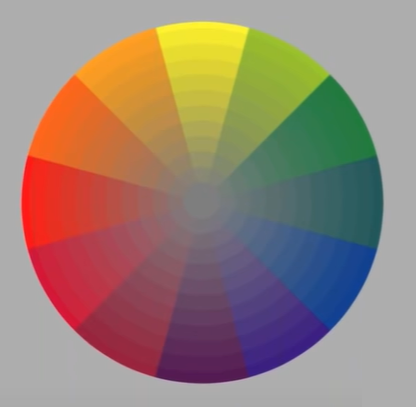
First, I want to explain the tool that should be every artist's all-time friend: the color wheel. This color wheel is the traditional painter color wheel.
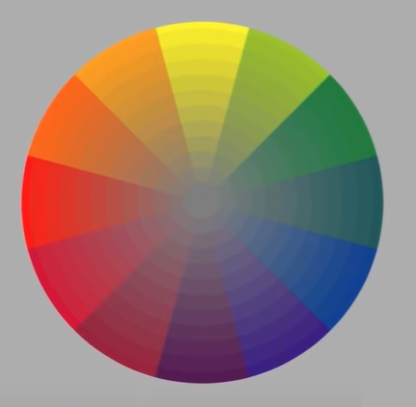
It's built on three master colors: yellow, red, and blue. By mixing primary colors together you get secondary colors between the primary colors. These are orange, violet, and green. The outside of the circumvolve organizes the colors co-ordinate to how they combine.
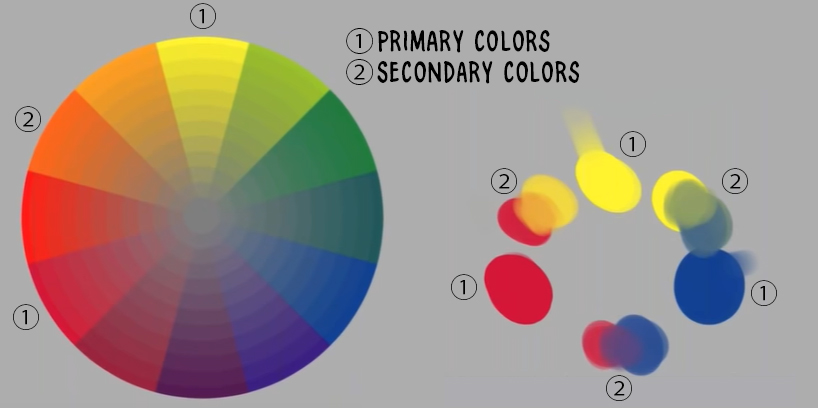
A key signal we will focus on today is "complementary colors". Complementary colors are on opposite sides of the color bicycle. When yous mix complementary colors together, for example, blueish and orange, the result will be a gray color. That is true for every single of these color pairs. When yous mix violet with yellow, you volition get a muddy grayness color.
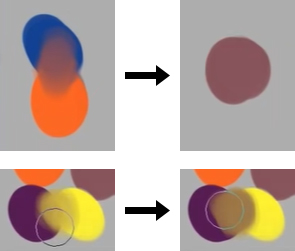
Gray is in the middle of the color wheel. The color wheel is important because information technology will be a guideline to identify how colored light influences the original or base color, chosen the "local color".
SHADING
Before I start using colors, I'll explain the principles of shading. In a simplified world, everything would be grayscale considering it would be easiest to draw and paint.
For this case, let's imagine a neutral grey ball on a gray table with a source of light.
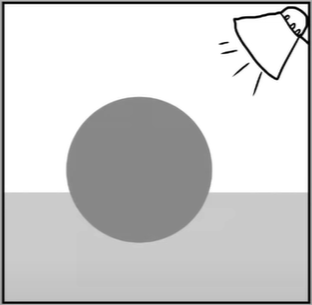
The lite comes from the right top corner. When the low-cal hits the surface, all planes of the geometry facing the lite are lit and become brighter, while all planes non hit by the light are in shadow.
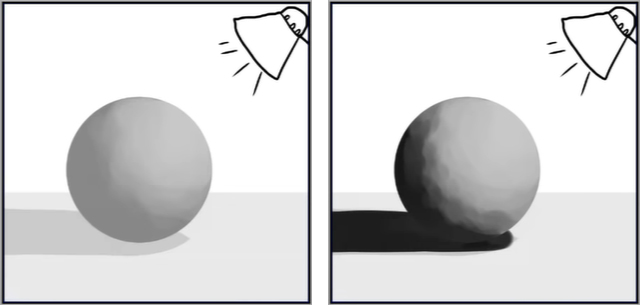
There's likewise a third kind of calorie-free source that comes from the physics of the light itself. Light bounces around everywhere and then a petty scrap of reflected light appears in the shaded area. The reflected light is never equally strong as the light itself.
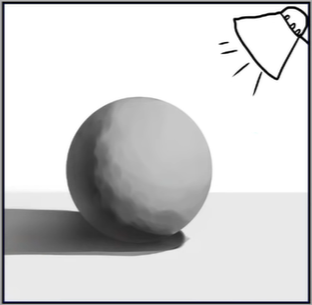
Those are the nuts of shading. With these principles, y'all can create the illusion of dimension simply past knowing the source and direction of the lite.
Color AND Low-cal
Even though this is a apartment surface, when we await at this movie we can understand geometry and the depth expressed in the picture. When you lot add colour, that's where the hard stuff is happening. Not only exercise we have to think virtually the values, the light source, the shadow shape, and the reflected low-cal, but also the color of the surround, the color of the light, and the color of the shadows. There are a lot of complicated elements.
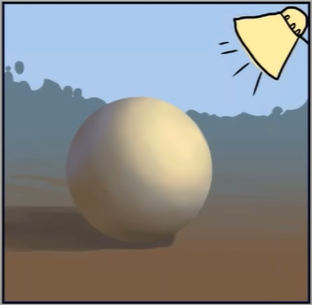
Allow's use the same grey ball in a unlike environment. The environment is quite warm with earthy tones, and the light source has a colour. If we imagine this as an outside surroundings, the source of calorie-free will be the Sun so it volition be yellow.
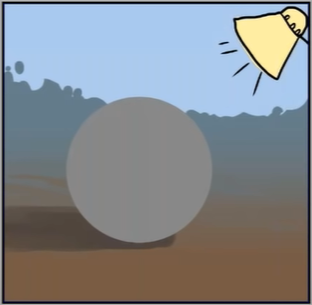
What happens when the light hits the surface of the grey ball? The light is xanthous, so the highlight on the grey ball is yellow.
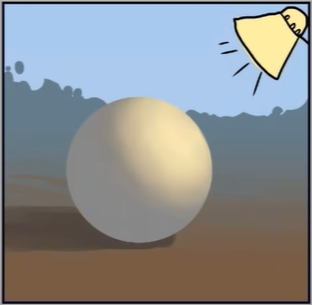
The surroundings is a warm brown. Shadows are influenced by the color of the surround, so the shadow is a warm color, not just black.
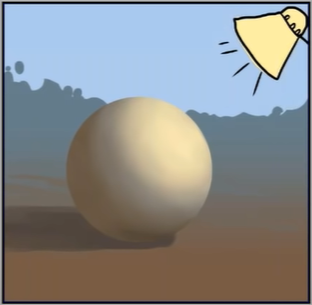
There'due south also some reflected light from the blue sky that influences the shadow side. It'due south very frail in this example, but I think it makes the signal.
USING THE COLOR Bike
And then what does the colour cycle have to do with this explanation of how the lite works?
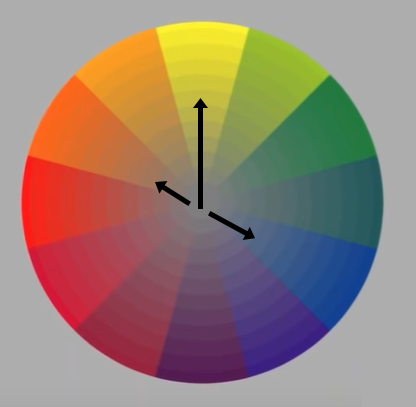
Nosotros started with just a grayness ball because information technology'south easier to explicate. Grey is in the eye of the color bike. We have a yellow light source then we await for yellow on the color wheel and we know that we can push in this management to predict the resulting color from the light. It's very unproblematic with gray because it always goes toward whichever color we want to use to information technology.
For the highlight, we move from the centre of the color wheel toward the xanthous. For the warm shadows, move from the local gray colour to the warm tones. Finally for the blueish reflected low-cal, nosotros move from the gray toward blue.
This is a simple example, but it'southward really of import to imagine it on equally elementary a state of affairs as possible. When you utilise unlike local colors, you will have a much easier understanding of what is going on with the colors and why they change the style that they do.
Color THEORY IN ACTION
So far we've looked at the basic color theory. Now let's encounter it in action past painting this graphic symbol.
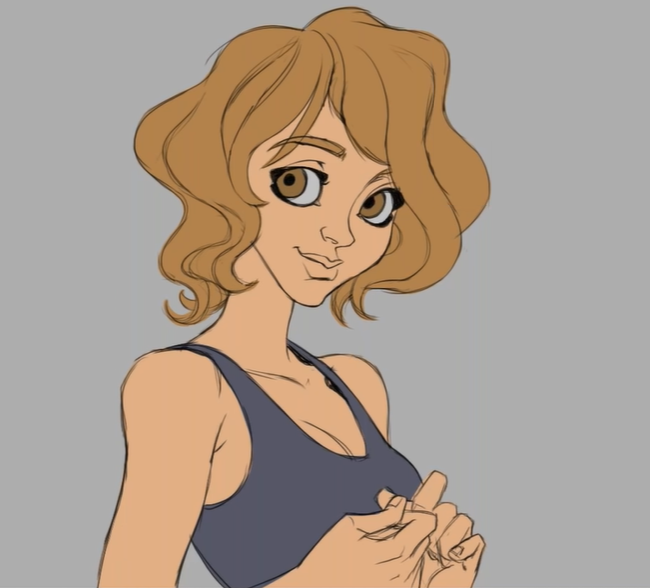
In this example, we'll utilize the same lighting weather condition every bit our gray ball, with warm light coming from the Sun, warm shadows from earthy tones, and some reflected light from the blue sky.
For the pare and the hair, I choose the shadow color by darkening the local color and moving information technology towards red to make it warmer. For the highlights, I make the local color brighter and more than yellow.
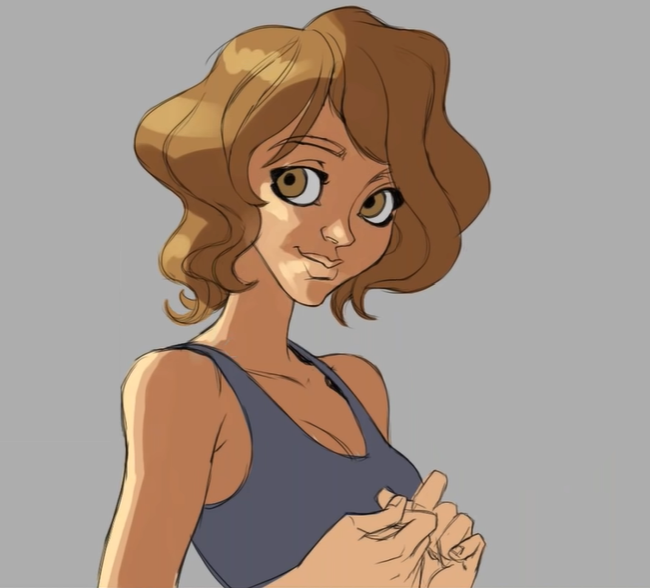
Calculation warm lite to cool local colors
It'southward simple when working with warm colors and making them warmer for shadows and highlights. The difficulty starts with more desperate colors like the bluish blouse.
We outset with bluish on the color bike. If nosotros draw a directly line through from blue to orange, the line goes through greyness. This ways that for blueish, nosotros need to desaturate it to brand information technology warmer.
When I did not understand colors at all, I would take the local color and slide information technology down and increase the saturation for this color.
Merely equally you can see, the shadow is much bluer and cooler than the local color even though the other elements in the piece have warm shadows. It feels incorrect because information technology has a different color shadow.
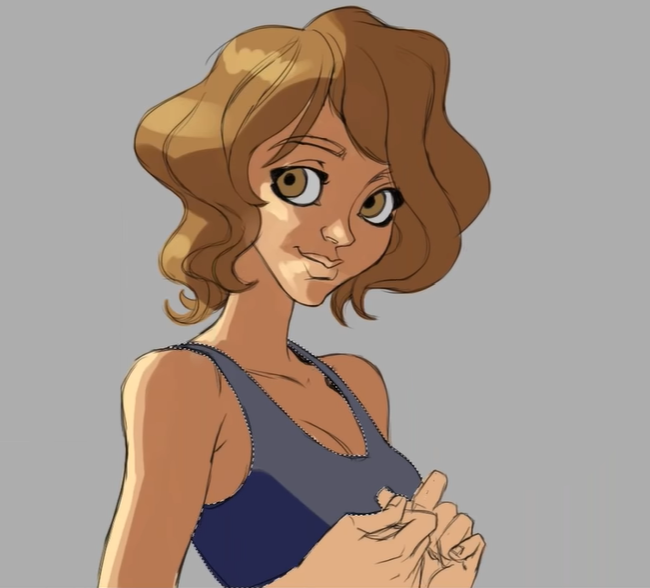
Here's the appropriate shadow color for the shadow on the blue blouse. All the colors are unified past the same lighting conditions, with warm light and have warm shadows.
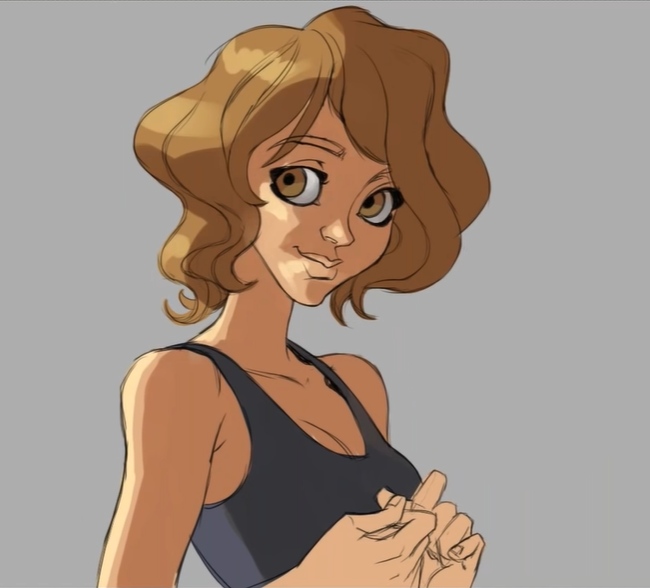
Skin is never just ane color, so I add some red tones using the airbrush. I add blood-red on the cheeks, as well every bit where the skin is thinner and has more claret vessels close to the surface.
Next is the reflected sky color that hits the shadow area. Orange and blue are on opposite sides of the color wheel, and so they are complementary colors. When we mix ii complementary colors, they plough grayness, and so when the blue lite hits the color of the skin, nosotros will see gray. I apply a slightly pinkish violet color.
And so, I blend the colors together.
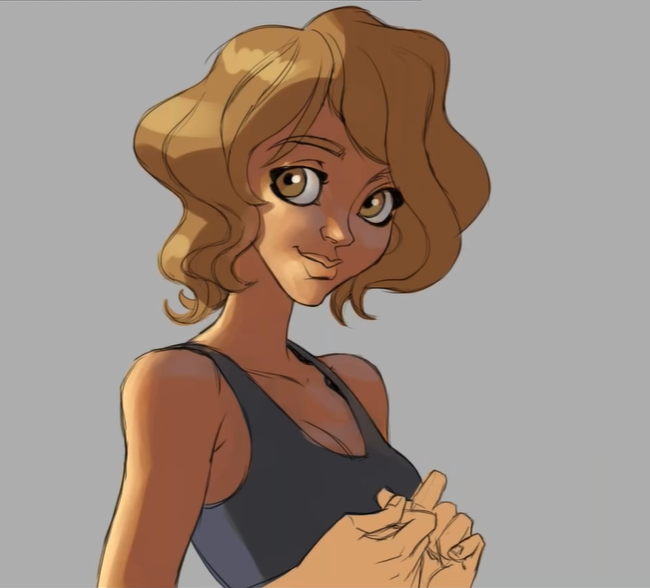
You can utilize the same approach to exercise something more drastic with the colors under dissimilar lighting circumstances.
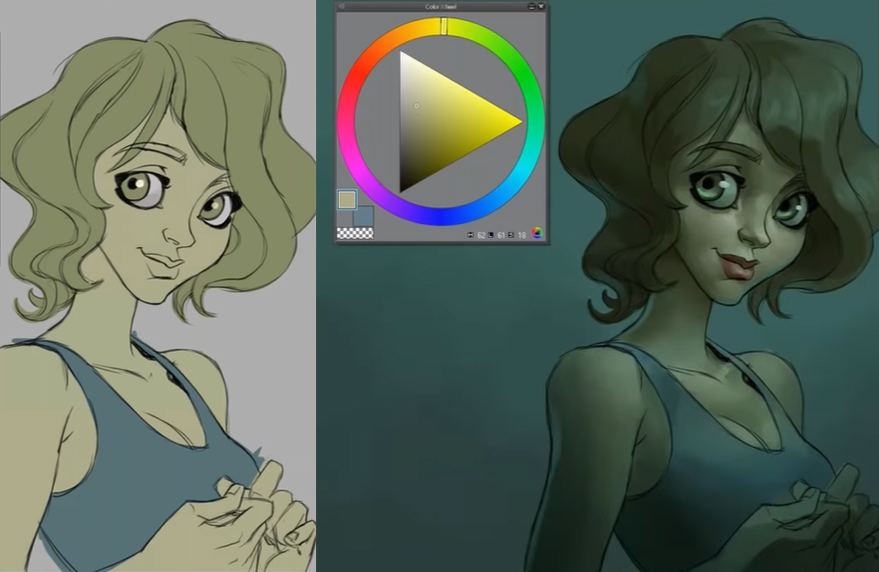
You can take whatever type of color reference and apply it to your paintings. Just remember to always think nearly the color of the light, the influence of the environment on the shadows, and any secondary lite sources that can influence the surface.
Colors can make a huge divergence to your artwork in the emotions that come with the colors, so employ them wisely!
Watch Magdalena's webinar for the total live cartoon and Q&A session!
Nigh THE Creative person
Magdalena was born in Poland, and is currently living and working in Deutschland as a Senior Concept Artist for game developer Ubisoft. Digital painting is her passion, spending any costless time working on illustrations and character design. She's an active speaker and guest instructor at acme game evolution universities in N-Rhine-Westphalia area of Germany.
Portfolio
Twitter
Source: https://www.clipstudio.net/how-to-draw/archives/161372
0 Response to "Digital Art Drawing Circle Nightnare"
Post a Comment